
Charting Tanzania’s Blue Economy Future Through Climate Finance and Collaboration

COP27 Side Event Highlights Growing China–Africa Cooperation on Renewable Energy
November 26, 2022Dar es Salaam – May 2021
By IECDS
Tanzania’s coastline, lakes, rivers and marine ecosystems have long sustained livelihoods, supported trade and shaped communities. Yet despite possessing some of Africa’s most significant aquatic resources, much of the country’s blue economy potential remains untapped.
At the same time, climate change is placing growing pressure on coastal and marine ecosystems. Rising sea levels, changing ocean currents, flooding, coastal erosion and ecosystem degradation are increasingly threatening both economic opportunities and environmental resilience.
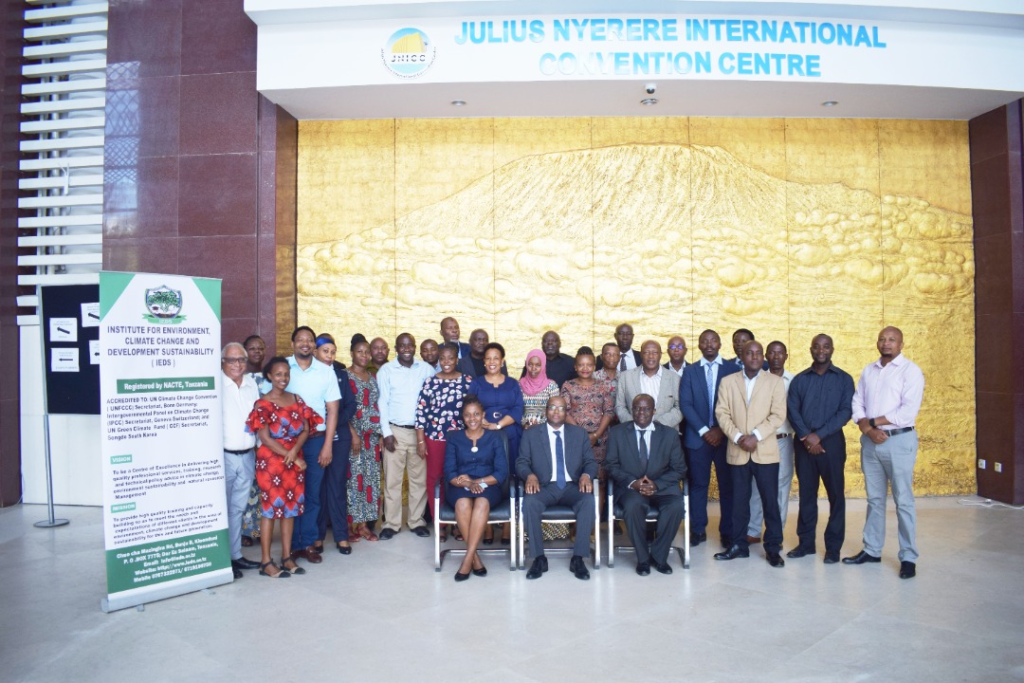
Against this backdrop, the Institute for Environment and Development Sustainability (IECDS), in partnership with CRDB Bank Plc, convened a national stakeholders’ consultative meeting in Dar es Salaam to explore a critical question:
How can Tanzania commercialize its blue economy while strengthening climate resilience and unlocking access to international climate finance?
Bringing diverse voices to the table
The consultation brought together representatives from government institutions, academia, financial institutions, research organizations, civil society and the private sector. Participants represented sectors as diverse as fisheries, tourism, marine conservation, finance, energy, maritime transport and climate policy.
The gathering reflected a growing recognition that the future of Tanzania’s blue economy cannot be shaped by any single institution. Like many complex development challenges, it requires collaboration across sectors, disciplines and governance levels.
Throughout the discussions, participants emphasized that the blue economy is far more than fisheries or maritime trade. It encompasses a broad range of sectors, including aquaculture, tourism, renewable energy, marine biotechnology, transport, conservation and coastal infrastructure.
The challenge is not the absence of opportunity. Rather, it is how to connect these opportunities through effective governance, investment and innovation.
Looking beyond traditional approaches
One recurring theme throughout the meeting was that Tanzania’s blue economy transition requires moving beyond fragmented and sector-specific interventions.
Participants noted that while important policy and institutional foundations are emerging, including Zanzibar’s Blue Economy Policy and Mainland Tanzania’s ongoing Blue Economy Strategy process, significant gaps remain in coordination, financing, infrastructure and technical capacity.
Many of the opportunities identified during the consultation share a common feature: they sit at the intersection of economic development and climate action.
Mangrove restoration, sustainable fisheries, marine spatial planning, blue carbon initiatives, climate-smart aquaculture and offshore renewable energy are not simply environmental projects. They are investments capable of generating livelihoods, attracting finance and strengthening resilience against climate change.
This integrated perspective was central to discussions on how Tanzania can position itself within the rapidly growing global blue economy.
Climate finance as a catalyst
A major focus of the meeting was the role that climate finance can play in accelerating blue economy transformation.
Marine and coastal ecosystems provide critical climate services. Mangroves, seagrass beds and coastal wetlands act as powerful carbon sinks while also protecting communities from storms, flooding and erosion. These ecosystems therefore present opportunities to attract financing from international climate funds that increasingly prioritize projects delivering both development and climate benefits.
Participants highlighted the importance of designing bankable projects capable of accessing funding mechanisms such as the Green Climate Fund (GCF), the Global Environment Facility (GEF), the Adaptation Fund and other international financing windows.
The discussion signaled a shift in thinking—from viewing conservation and development as separate objectives to recognizing them as mutually reinforcing investments.
What emerged from the dialogue?
While discussions covered a wide range of sectors, several priorities consistently emerged.
First, stakeholders emphasized the need for stronger coordination and governance across blue economy sectors.
Second, there was broad agreement that investments in infrastructure—including fishing harbours, cold-chain systems, processing facilities and maritime services—are essential for unlocking economic value currently lost within existing supply chains.
Third, participants called for greater investment in science, research and data. From fish stock assessments to marine spatial planning and blue carbon accounting, evidence-based decision-making was repeatedly identified as a prerequisite for sustainable growth.
Finally, participants stressed the importance of community engagement and capacity building. The benefits of blue economy development must reach coastal communities, fishers, entrepreneurs and local institutions if long-term sustainability is to be achieved.
A shared vision for the future
Perhaps the most important outcome of the consultation was not a specific project or investment proposal, but the emergence of a shared vision.
That vision recognizes that Tanzania’s blue economy future depends on balancing economic ambition with environmental stewardship. It recognizes that healthy ecosystems are productive assets, not obstacles to development. And it acknowledges that climate resilience, social inclusion and economic growth must be pursued together rather than separately.
As Tanzania advances its national blue economy agenda, the consultation demonstrated the value of bringing stakeholders together to co-create solutions, identify priorities and build partnerships.
The country possesses the natural assets, strategic location and growing institutional commitment needed to become a leader in sustainable blue economy development in Africa.
The next challenge is turning that collective vision into action. For IECDS and its partners, the consultation marked an important step in that journey, one that seeks to position Tanzania’s blue economy not only as a source of growth, but as a foundation for a more resilient and sustainable future.


